

Discovering South Africa over a week road trip and Bapedi wedding Culture


The hotel offers a remarkable nature conservancy experience, complete with enticing bird-watching opportunities, exhilarating horse riding adventures, serene camping sites, and even the option for an outride through the game park, allowing guests to observe a variety of fascinating wildlife species and more.
Regrettably, our main purpose during the visit was to attend a wedding, leaving us with limited time for a comprehensive game tour. Nonetheless, as we journeyed through the ranch, we caught glimpses of captivating wildlife such as graceful giraffes, majestic ostriches, and elegant impalas. These encounters added an extra touch of excitement to our experience. Upon arriving in Polokwane, we were truly amazed by the grandeur of the Peter Mokaba Stadium, an imposing structure constructed in 2010 to host the prestigious Football Mundial event. Its sheer size and architectural magnificence left an indelible impression on us.

The impressive architecture stood tall amidst a seemingly remote location. It was around 15:00 when we decided to make a stop, and to our surprise, there was hardly any traffic in sight near the building. This marked our first self-driving tour in South Africa, and we were pleasantly surprised by the impeccable quality of the roads. The signage was excellent, guiding us effortlessly along our journey, and unlike some European countries, the toll fees were reasonable and not excessive. We successfully traversed a distance of 900 km from Durban to Polokwane, passing through Johannesburg, without encountering a single road incident.
The Bapedi people are an ethnic group in South Africa who speak Sepedi, a dialect of Sotho, and predominantly reside in the Limpopo province. Among the Bapedi, there are various subgroups such as Balobedu, Masemola, Mphahlele, Sekhukhune, Matlala, and more. The Bapedi wedding celebrations hold immense significance, earning them respect and popularity due to the symbolic meaning attached to these ceremonies.
Attending a Bapedi wedding was a tremendous honor for us, as we had the opportunity to witness and understand the deep cultural value that this population placed on their traditions. In doing so, we also discovered similarities with our native Rwandan culture. Typically, Bapedi wedding ceremonies span several months, with the main event taking place over the course of about a week. However, for logistical reasons, we were invited to attend only the ceremony on the day of the bride’s presentation.
In essence, the groom’s family initiates the process by formally requesting the bride’s hand in marriage through a letter. The bride’s family, usually represented by an aunt or uncle, responds by proposing several dates for the two families to meet and get to know each other. During these initial meetings, the families also agree upon the bride price, known as lobola or Magadi. This practice of requesting a dowry is common among many Bantu tribes and is referred to as “inkwano” in Rwanda, “bokangami” in Lingala (DRC), and “bondi” in Luganda (Uganda). In Bapedi culture, the bride price is paid in two installments prior to the wedding.
Once the bride price is settled, the wedding dates are determined, usually falling on a weekend to accommodate both families. The first wedding ceremony takes place at the bride’s side, while the second ceremony is held by the groom’s side. In this case, as the groom was a Turkish, the second wedding was planned to occur later in Türkiye.
A few days before the main event, relatives gather to assist with cleaning, cooking, and preparations. The groom, along with his brother and uncles, arrives at least three days before the wedding to perform a symbolic ritual of slaughtering a goat or sheep. Additionally, the bride’s family traditionally slaughters one or two cows or goat for the wedding, with the groom’s side being present. Usually it’s even the groom, his brothers and uncles who slaughter the animal and in this case, we have been told that the groom and his brother slaughtered the goat.
On the wedding day, festivities commence early in the morning. The atmosphere is filled with music, songs that vary based on the family or lineage. Meanwhile, the bride remains indoors, usually unseen by anyone until the presentation. Guests arrive a few hours before the scheduled event and take their seats. When the time comes for the presentation, the groom and his family enter first, followed by the bride and her parents. Close family members and relatives accompany the wedding procession. Finally, the bride is presented to the groom and his family, marking a significant moment in the ceremony.
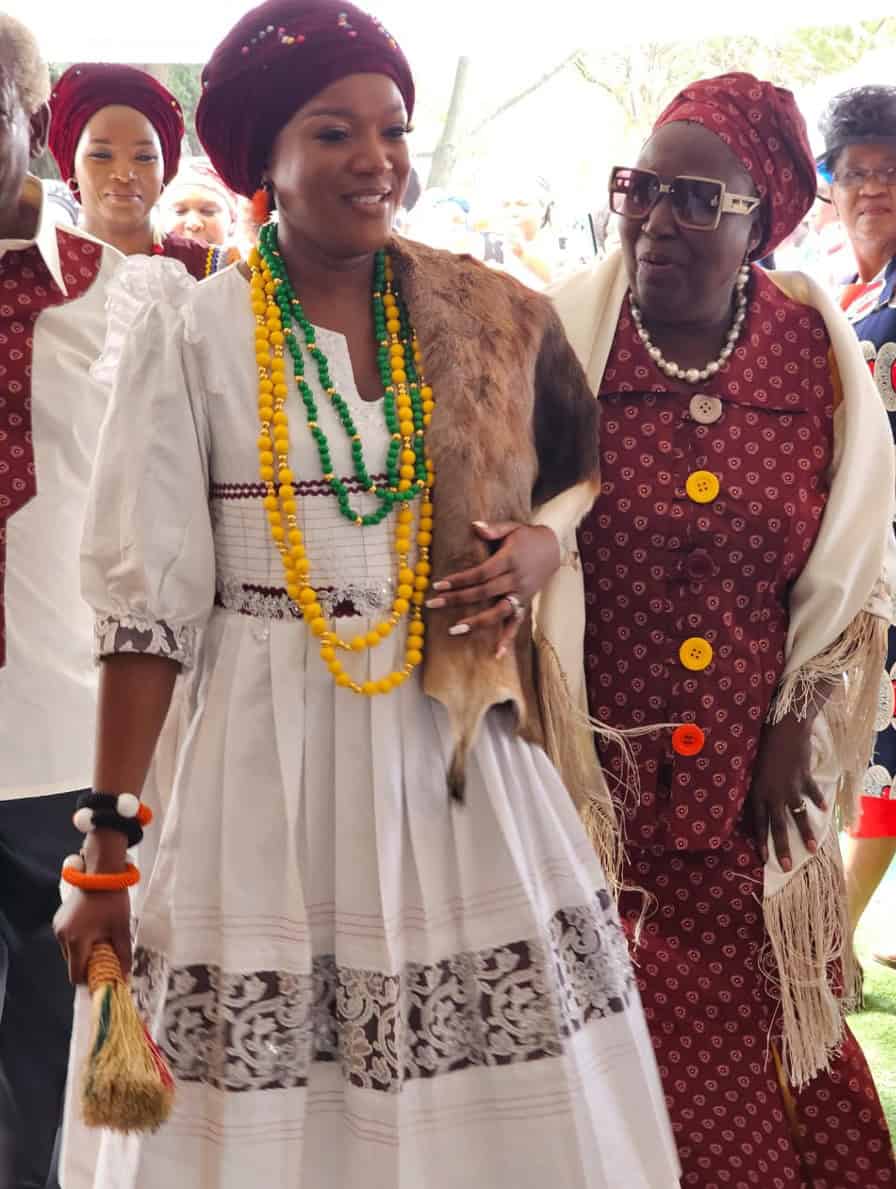
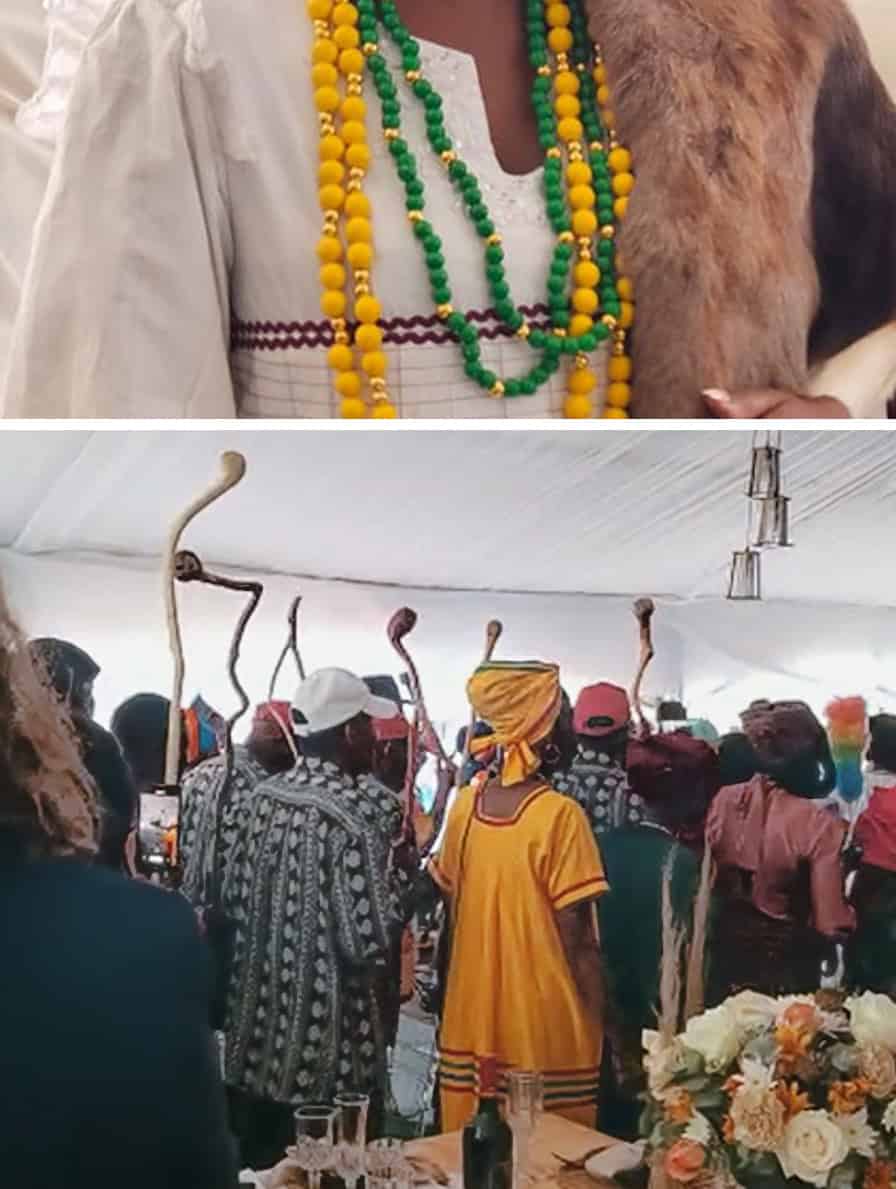
From my observations, it appeared that while the surrounding villages’ residents were invited to join, they weren’t actively involved in the ceremony itself. Dozens of people gathered in the garden, their cars adorned with drinks and food, joyfully dancing to the lively tunes of South African pop music as they eagerly awaited the commencement of the event.
Following this, a series of wise speeches and heartfelt poems were delivered, offering invaluable marital advice to the newlywed couple. One such example was when the groom’s mother addressed the groom, imparting this wisdom: “The key to a lasting marriage lies in the groom’s wisdom to remain silent when he is right and also when he is wrong.” These heartfelt words were followed by a delightful lunch and a heartfelt toast to the health and happiness of the newly joined couple.
As the festivities continued well into the night, we were regrettably obliged to depart early to begin our journey back to Durban, this time passing through Eswatini. Nonetheless, we left with a profound appreciation for the Bapedi wedding culture and a deep sense of gratitude for the cherished invitation extended to us.
The following morning, we made the decision to embark on our journey back, opting for a different route that allowed us to make intermittent stops along the way. As we ventured through the lush green hills of Limpopo Province, we were greeted by vast stretches of agricultural land, spanning kilometers upon kilometers. The landscape was adorned with thriving farms cultivating a diverse array of crops, including oranges, pineapples, sunflowers, cotton, and citrus fruits. It was a captivating sight to witness the bountiful fields as we traveled from one farm to another, immersing ourselves in the vibrant agricultural tapestry. Furthermore, our journey took us through breathtaking game reserves, each one presenting a distinct opportunity to witness the abundant wildlife thriving within these protected havens. With every transition from one reserve to the next, we found ourselves captivated by the awe-inspiring splendor and the harmonious coexistence of diverse fauna with the surrounding landscapes. The journey back not only allowed us to appreciate the natural abundance of the region but also provided us with a deeper understanding of the intricate connection between agriculture, wildlife, and the breathtaking scenery that defines this part of South Africa.

We made a delightful stop at Mogotodam in Zebediela, located along the R519 road in Limpopo. This picturesque spot was constructed with the purpose of providing water to the nearby towns. We took advantage of the scenic surroundings to capture some memorable photographs, cherishing the beauty of the dam and its tranquil surroundings.

Leaving the dam behind, we continued our journey along the R33 and then onto the R17 roads. Along the way, we came across the impressive construction site of the massive solar plant of RICHARDS Bay Minerals (RBM). Set to be operational by 2024, this plant will boast a remarkable capacity of 300GWh. As the afternoon progressed, we made our way through the Eswathini border via the MR8 and MR11 roads, eventually arriving in Mbabane, the capital city.

The landscape of Eswathini is as diverse and breathtaking as that of Switzerland or Rwanda, resembling a country of a thousand hills. Unfortunately, due to heavy rain, we were unable to make any stops along the way. Thus, we continued our journey directly to Matenga Lodge, where we would spend the night. After enjoying a delicious local meal, we retired for the evening, ready to rest and rejuvenate for the adventures that awaited us in the days ahead.


The following morning, we resumed our journey, making our way back to Durban through the Lavumisa border.
As we drove through the Eswatini countryside, we were greeted by the sight of expansive sugar cane plantations lining the MR11 motorway. The landscape was also dotted with numerous herds of cows and sheep, adding to the charm of the rural scenery. Continuing our route from Pongola to Hluhluwe, the scenery transformed into majestic mountain vistas, with a picturesque mix of sugar cane and pineapple plantations interspersed with captivating game reserves. However, our progress was hindered by inclement weather and heavy rainfall. Nevertheless, determined to reach our destination, we pressed on, making our way towards Richards Bay/Empangeni, hoping to arrive in Durban before nightfall. The challenging conditions only heightened our resolve to complete the journey and find solace in the comfort of home.
EMAIL :